
Just a little heads up: some of the links in this blog are affiliate links, which means if you click on them and make a purchase, we may earn a small commission at no additional cost to you.
We only recommend products and services we genuinely believe in and have personally used or researched. Your support through these links helps us keep bringing you valuable content, so thank you for being amazing!
Being a highly sensitive person means your nervous system processes everything more deeply than most people’s do: sounds, lights, emotions, other people’s moods, even your own thoughts. The scientific name is sensory processing sensitivity (SPS), a well-researched personality trait shared by roughly 15 to 20 percent of people. It isn’t a disorder or a flaw. It comes with real challenges, like overstimulation, and real strengths, like empathy, creativity, and depth.
What does it feel like to be highly sensitive?
For many of us, it shows up in small moments that feel way too big. Your eyes fill up at a TV commercial. You need ninety minutes of quiet after a birthday dinner you actually enjoyed. The fluorescent lights at the grocery store leave you feeling like you’ve run a marathon.
One of my clearest examples happened at a family gathering. Someone had moved a few stones in the garden, and underneath them was an ant colony. The ants were frantically carrying their eggs to safety, and I just stood there watching, completely in awe. Part of me felt sorry for them, because their home had just been taken away. But mostly I felt amazed by how fast they acted. It felt like watching a mother save her child and I caught myself silently cheering them on: come on, you can do it. Then, without any warning, a family member sprayed them with poison right in front of me. Before I knew it, I burst into tears and had to move away from the situation.
Everyone around me was surprised by my reaction, and I felt a bit silly for crying. But for me, it had been such an intense switch, from awe and hope to watching it all end in a second. The others didn’t seem to feel that crash. I did, because I’m a highly sensitive person.
And somewhere along the way, you’ve probably been told you’re “just too sensitive,” as if that explained everything and solved nothing. If any of this sounds familiar, there’s a name for what you’re experiencing, and you are far from alone.
HiSensitives was built around exactly this question: what does it mean to process the world more deeply than most, and how do you build a life that actually works with that? In this article, I’ll walk you through the psychology behind high sensitivity, how it differs from other traits and conditions, what tends to trigger overwhelm, and what helps me feel at ease in my own skin.
What is sensory processing sensitivity?
Sensory processing sensitivity is a stable personality trait. It’s not a disorder, and it’s not a phase you’ll grow out of. Psychologist Elaine Aron brought the concept into the mainstream in the 1990s, and researchers since then have confirmed that SPS describes consistent, measurable differences in how the brain processes information, both from the outside world and from within.
The trait shows up in roughly the same proportion across cultures and has even been documented in over 100 animal species. That tells us something important: sensitivity serves an evolutionary purpose. It isn’t a glitch in your wiring.
At its core, SPS means your brain processes what comes in more thoroughly than average. You don’t just register a sound or an emotion and move on. You process it, connect it to other things you know, reflect on what it means, and feel its weight. That’s not weakness. It’s a different operating system.
Is being highly sensitive a mental health condition?
No. SPS can go hand in hand with anxiety or depression, but it isn’t the same thing as either. You can be highly sensitive and doing really well. The trait mostly becomes a struggle when your environment, your circumstances, or your coping strategies don’t take it into account.
What are the strengths of being highly sensitive?
High sensitivity comes with real strengths: stronger empathy, heightened creativity, a sharp eye for detail, and deeper emotional connections are all well-documented. Emotional sensitivity in particular is often what makes highly sensitive people such perceptive friends and thoughtful collaborators.
For me, the biggest one is being able to tune into other people. I often sense when someone has reached their limit, needs a break, or is overthinking, long before they say anything. Usually long before they notice it themselves, too.
I once did a brainstorm session with someone for work, and at some point I could feel their energy was done for the day. I asked, “Are you sure you want to keep going?” They said, “Yes, let’s keep going!” Fifteen minutes later, they suddenly stopped: “Oh my gosh, I just noticed I’m completely finished. My energy is gone.”
Another time, I sensed something was going on with someone close to me. I asked about it, and they told me everything was fine. But I kept feeling it. At the end of that week, the bubble burst, and they shared that they’d been struggling since the beginning of the week. That was exactly when I’d first picked up on it.
There’s one condition, though: this works best when I’m grounded in my own energy. When I’m overstimulated myself, my own noise drowns out the signals. The goal isn’t to become less sensitive. It’s to stop fighting it, and to take good care of the system that makes these gifts possible.
What are the core traits of a highly sensitive person?
Elaine Aron’s DOES model organizes the HSP experience into four connected traits. Many HSPs recognize themselves in it right away:
- Depth of processing. You think things through thoroughly before acting, replay conversations long after they’ve ended, and notice implications others miss.
- Overstimulation. Because you take in so much, your nervous system reaches its limit faster, especially in busy, loud, or emotionally charged places.
- Emotional reactivity and empathy. You respond strongly to other people’s pain, feel affected by conflict even when it has nothing to do with you, and have a rich, sometimes overwhelming inner world.
- Sensing the subtle. You’re the one who notices the painting is slightly crooked, the room just got a bit colder, or something is off in a colleague’s voice before anyone else catches it.
Want to check how many of these apply to you? I put together 60 signs that you’re a highly sensitive person.
What does overstimulation feel like for an HSP?
Overstimulation isn’t just feeling tired. It’s a physical state, and it builds up. Common triggers include loud environments, bright or flickering lights, strong perfume, crowds, time pressure, and conflict. One of these on its own might be manageable. Several at once, at the end of a long day, can leave you completely drained.
For me, it comes in three levels:
- Lightly overstimulated: I feel a bit tired, not really motivated to do anything, and I feel a strong need to rest.
- More overstimulated: I stop feeling grounded in my energy. My breathing speeds up, and everything feels rushed.
- Deeply overstimulated: my hands can start shaking, I feel dizzy, and I’m not fully there mentally. I forget things or put things in the wrong place. Each additional sensory input in my surroundings feels like too much.
That last level is a very clear signal that I’ve lost my grounding completely. The earlier I catch the first level, the less likely I end up in the third.
Needing downtime after intense experiences isn’t lazy or antisocial. It’s biology. Your nervous system has processed far more information than a less sensitive person’s would in the exact same situation. Recovery time isn’t optional. It’s maintenance.
How is high sensitivity different from introversion, shyness, and being an empath?
Let’s have a look at some commonly questions I see all the time when it comes to being a highly sensitive person:
Are all highly sensitive people introverts?
No. Around 70 percent of HSPs are introverted, and roughly 30 percent are extroverted. And plenty, like me, land somewhere in between.
I’d call myself an ambivert. In social settings I’m chatty, I enjoy people, and I’m good at connecting, so people often assume I’m an extrovert. But extroverts recharge from social interaction, and I don’t. I recharge on a calm day off: gardening, reading a book, doing yoga, meditating. That’s when I go into full introvert mode.
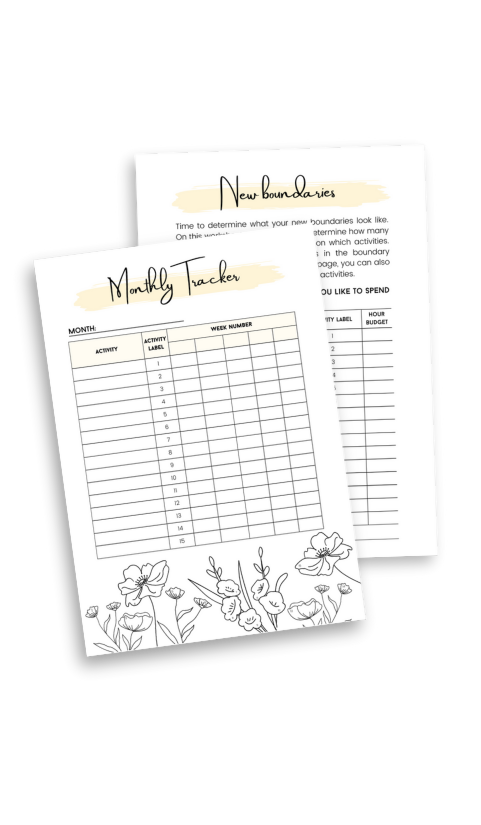
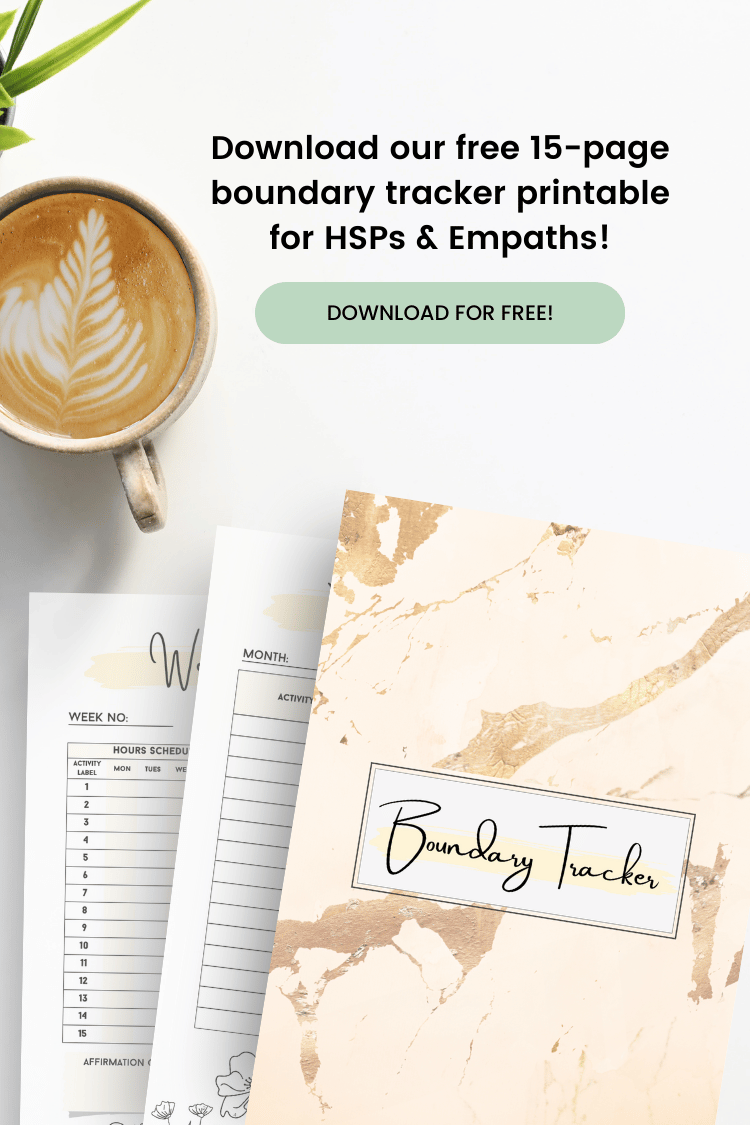
I love everyone I spend time with, let me make that clear. But a weekend packed with social plans from Friday to Sunday evening would leave me completely drained. For years I leaned into the extrovert label because I’m talkative, and I kept hitting the same wall: I’d overcommit, and I’d feel burned out afterwards. That struggle is exactly why I developed the free Boundary Tracker for HSPs, to help you see how you spend your time, who you spend it with, and whether there’s enough room left for self-care.
That’s the key difference. Introversion and extroversion are about where you get your energy. High sensitivity is about how deeply you process, and how strongly your body reacts to stimulation. The two overlap a lot, but they aren’t the same, and mixing them up leads to misunderstanding both.
Is being highly sensitive the same as being shy?
No. Shyness involves fear or self-consciousness in social situations. High sensitivity isn’t rooted in fear. That said, a sensitive person who has been told over and over that they’re “too much” can develop social anxiety along the way. Knowing the difference helps you understand yourself better, and helps you find the right kind of support.
What’s the difference between an HSP and an empath?
The two terms are often used interchangeably, but they describe different things. High sensitivity is a well-researched trait with measurable characteristics. “Empath” is a broader, more informal term that focuses on the experience of absorbing other people’s emotions. Many HSPs relate strongly to it, but not every self-identified empath meets the criteria for sensory processing sensitivity, and the other way around. I dive deeper into this in empath vs. HSP: what is the difference?
How does high sensitivity relate to autism, ADHD, and social anxiety?
There’s real overlap here, and research on how these traits relate to each other is still evolving. They’re different profiles, but they aren’t mutually exclusive: you can be highly sensitive and autistic, or highly sensitive and have ADHD. If you recognize yourself in the descriptions below, please don’t let the HSP label stop you from seeking an assessment. Understanding your full picture is what gets you the right support.
Autism. Many autistic people experience sensory overload, just like HSPs. Autism is a broader neurodevelopmental profile, though, which can also include differences in social communication, a strong need for routine and predictability, and deep, focused interests. Sensory sensitivity is one part of that picture, not the whole of it. That’s why a proper assessment looks at everything together, not just sensory reactions. You can read more in highly sensitive person and autism.
ADHD. ADHD is mainly about how attention, impulses, and energy are regulated. Sensory processing sensitivity is about how deeply you process what comes in. They’re different things, but they often show up together, and many people with ADHD are very sensitive to sensory input too.
Social anxiety. Some HSPs develop social anxiety after years of overwhelm or painful social experiences. High sensitivity itself isn’t rooted in fear, but when anxiety is there, it deserves its own care and support. A good therapist can help you untangle what’s what.
What triggers overwhelm in highly sensitive people?
You might wonder what exactly it is that triggers overwhelm in HSPs. Here are some common triggers:
Sensory triggers
The most common physical and environmental triggers are noise, bright or flickering lights, crowds, strong perfumes or chemicals, temperature changes, hunger, and caffeine. They hit harder for HSPs because the nervous system processes sensory input more thoroughly, so it also reaches its limit sooner. The same party that energizes one person can leave an HSP needing a full day to recover.
Triggers differ a lot from person to person. One HSP may be very sensitive to sound but handle crowds fine. Another may barely notice noise but find strong smells physically distressing. That variety is part of the trait, not an inconsistency in it.
Emotional and social triggers
Emotional triggers are just as real. Conflict, criticism, feeling watched or evaluated, absorbing a friend’s stress, witnessing injustice or harm, or sitting through a film with intense themes can all cause real overwhelm. Many HSPs don’t just observe someone else’s distress from a distance. They feel it in their own body, the way I felt it watching those ants suffering.
These reactions aren’t overdramatic. They’re the natural result of a nervous system wired to process deeply and respond fully. Calling them “too much” only adds shame to an already heavy load.
How can highly sensitive people manage overwhelm?
So, how can you manage overwhelm as an HSP? I’ve sorted them into three categories:
In-the-moment relief when you’re overstimulated
When you’re already overstimulated, the goal is to bring your nervous system back down so your brain can process what it’s already taken in. These are the tools I reach for, in this order:
- My breath. It’s the one tool I always have with me. I start with slow, deep breaths in and out. Sometimes I use box breathing: breathe in for four counts, hold for four, breathe out for four, hold for four. It calms my energy down remarkably fast.
- My Shakti mat or grounding mat. When I’m really overstimulated and at home, I lie down on my Shakti mat or my grounding mat, depending on what feels most comfortable in that moment. A heads-up about the Shakti mat: the first moments of lying down can feel a bit stimulating. But after about two minutes, a wave of relaxation spreads through my body, and it’s amazing.
- Essential oils. I love calming oils like lavender But I also reach for feel-good oils like orange, because sometimes, when you’re overwhelmed, it helps to simply feel good for a moment.
Two other research-backed tools are worth knowing:
- The 5-4-3-2-1 grounding exercise. Name five things you can see, four you can touch, three you can hear, two you can smell, and one you can taste. It anchors your attention in the present and interrupts the spiral of overwhelm.
- Gentle movement or natural light. Stepping outside or moving your body a little can bring your nervous system down without any preparation.
You’ll find more of my favorite tools in my personal HSP emergency kit, and more ideas in these 24 grounding techniques for HSPs and empaths.
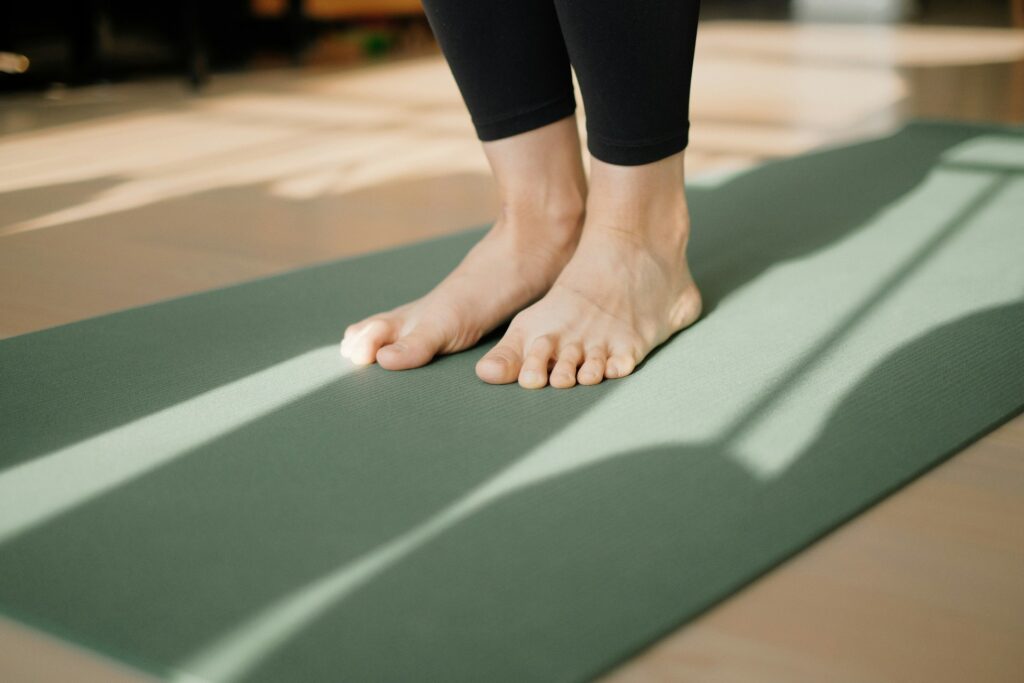
Prevention: building a life that works with your nervous system
At HiSensitives, we see regulation as the root everything else grows from. When your nervous system feels safe, boundaries, connection, and self-trust become so much easier. And for HSPs, prevention almost always works better than damage control.
That means designing your environment and schedule around how your system actually works, instead of waiting until you’re depleted. Strategies with solid research behind them include:
- Building healthy routines
- Planning quiet recovery time after busy periods
- Reducing sensory clutter at home and at work: soft lighting, less noise, visual simplicity
- Protecting your sleep
- Giving yourself transition time between activities instead of rushing from one thing to the next
A simple place to start: look at what gives you energy and what drains it. For me, a calm day with my hands in the garden or a book on my lap refills me. A fully booked weekend empties me. Once you can see that clearly, you can start making choices with it instead of against it.
Longer-term support: therapy and community
Cognitive behavioral therapy (CBT) has strong research support for working with the thought patterns that make overwhelm worse: criticizing yourself for needing more rest, shame around your sensitivity, and catastrophizing after conflict.
Mindfulness-based stress reduction, an 8-week structured program, has been tested specifically with HSPs. Participants showed less stress and social anxiety, and more self-acceptance, emotional empathy, and mindfulness, with effects that held and even improved at a four-week follow-up.
Acceptance and commitment therapy (ACT) offers another research-backed path, teaching you to make room for strong emotions without letting them run the show.
Therapy isn’t the only option, though, and it isn’t always the first step. Sometimes the most important first step is simply being somewhere that gets it. That’s what we try to offer at HiSensitives: blogs, practical tools, masterclasses with experts, and a free community of people who understand exactly what you’re going through.
High sensitivity is not a problem to solve
Today, I see my sensitivity as a real strength. Not because it got smaller, but because I’ve built a life that keeps me balanced. I’ve learned what I need and what isn’t good for my system.
For a long time, I tried to fit into the same mold everyone else seemed to be squeezing into. Eventually I realized that mold simply wasn’t made for me. It worked much better to ask myself how I want to walk through life, how I want to feel, and what I want to fill my days with. That’s a big part of why I became an entrepreneur, and why I follow my own path in my personal life too, including when it comes to family planning.
I know that comes from a place of privilege. Not everyone can change everything at once, and I couldn’t either. Creating a life that feels calm and supports my nervous system took me years, with plenty of struggle along the way. But it has been worth every bit of the effort.
So if you’ve just discovered you’re highly sensitive and it still feels like a burden, start here:
- Look at your life as it is right now.
- Notice what gives you energy, and what drains it.
- Change one thing that drains you, and replace it with something that fills you up.
That one swap is already a real first step. The work isn’t to become less sensitive. It’s to stop managing your sensitivity as a problem and start building a life that works with it.
That belief is the heart of HiSensitives: sensitivity, understood and supported, can become one of your greatest strengths. Rooted in who you are. Growing into who you’re becoming.
Frequently Asked Questions about Being a Highly Sensitive Person
It means your nervous system processes sensory, emotional, and social information more deeply than average. The scientific term is sensory processing sensitivity, a normal personality trait found in about 15 to 20 percent of people.
Common signs include getting overwhelmed by noise, lights, or crowds, needing downtime after busy days, feeling other people’s emotions strongly, noticing subtle details others miss, and being deeply moved by art, music, or nature. Elaine Aron’s HSP self-test is a helpful starting point.
Yes. Around 30 percent of HSPs are extroverted, and many others identify as ambiverts: social and outgoing in company, but needing quiet time alone to recharge because they process everything so deeply.
No. It’s a personality trait, not a diagnosis. It can co-occur with anxiety or depression, but many highly sensitive people thrive, especially when their environment supports how their nervous system works.
Slow breathing (like box breathing), grounding exercises such as 5-4-3-2-1, lying on an acupressure or grounding mat, calming scents, stepping outside, and quiet recovery time. Longer term, predictable routines, protected sleep, and less sensory clutter help prevent overwhelm in the first place.
Feeling seen in this? You don’t have to figure it out alone. Come say hi in our free HiSensitives Facebook community, or if overwhelm is what you’re struggling with most right now, take a look at our masterclass Reduce Anxiety and Overwhelm as an HSP.
You May Also Enjoy Reading These Articles

In this article, we collaborated with AI, meaning that the input and stories are original human ideas, but the text itself has been created with support from AI. All AI content is being edited and factchecked by our editor.